Ophiology Wordart Crafting.jpg: A Hand-Drawn Word Cloud for Real Creative Work
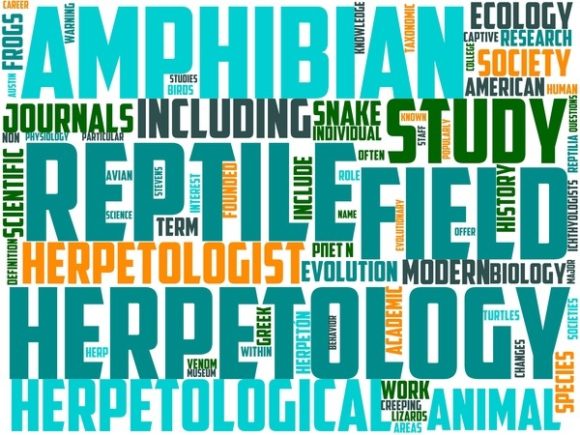
If you’ve ever stared at a blank T-shirt, a plain notebook cover, or a dull event banner wondering how to make it feel personal, meaningful, and visually alive—Ophiology Wordart Crafting.jpg is the kind of resource that quietly solves that problem. It’s not a stock photo or a generic template. It’s a hand-drawn, colorful word cloud built around the theme of ophiology—the study of snakes—but designed with broad creative flexibility in mind. The words are arranged organically, layered with texture and warmth, and rendered in high-resolution JPG format so it prints cleanly and scales well across formats.
Where You’ll Actually Use This Word Cloud (Not Just “Save It”)
People don’t download design assets to hoard them. They download them to do something. With Ophiology Wordart Crafting.jpg, that “something” shows up fast—in places where personality matters and mass-produced graphics fall flat.
Take a small-batch textile designer who hand-prints tote bags for local nature educators. She drops the word cloud into her layout software, adjusts contrast to match her ink color, and prints it onto organic cotton. The result? A bag that doesn’t scream “eco-friendly” in a cliché way—it whispers it through thoughtful typography, botanical rhythm, and a subject (snakes) that signals curiosity, adaptation, and quiet strength.
Or consider a high school biology teacher prepping for a herpetology unit. Instead of projecting a textbook diagram, she prints Ophiology Wordart Crafting.jpg on cardstock, cuts out individual words (“venom,” “scale,” “ectotherm,” “adaptation”), and turns them into a tactile vocabulary wall. Students move terms, group them by function, debate definitions—all anchored by visuals that feel human-made, not algorithm-generated.
Why This Works When Other Word Clouds Don’t
Most word clouds are generated automatically—flat, rigid, overly symmetrical, or crammed with filler words. Ophiology Wordart Crafting.jpg avoids those pitfalls because it’s hand-drawn. That means intentional spacing, subtle line variation, overlapping letters that invite closer looking, and a color palette that balances vibrancy with cohesion—not neon chaos.
That craftsmanship translates directly into usability. A wedding stationer using it for a “wilderness elopement” invitation doesn’t need to spend hours masking or recoloring. She imports it, sets blending mode to Multiply over a kraft paper background, and it integrates instantly—no extra layers, no transparency fixes, no pixelation at 12” print size.
Same goes for digital use. A blogger writing about mythic symbolism in reptiles embeds the image into a Substack post. Readers pause—not just because of the topic, but because the visual has weight and intention. It feels like part of the narrative, not an afterthought.
Real Scenarios, Not Just Categories
- A craft fair vendor uses it as a repeating pattern on iron-on transfer paper for denim aprons sold at a science-themed maker market—pairing utility with intellectual charm.
- A mental health counselor prints it on matte-finish magnets for her office whiteboard, using words like “shed,” “renew,” “awareness,” and “coiling”—metaphors clients connect with during sessions about growth and boundaries.
- A self-published author of a field guide to regional reptiles licenses the file for interior chapter headers, giving each section visual continuity without repeating the same photo or icon.
- A homeschool parent laminates a large version and uses dry-erase markers to turn it into a weekly “word hunt” activity—asking kids to find synonyms, identify parts of speech, or sketch what “ophidian” might look like.
What to Consider Before You Use It
Because it’s hand-drawn—and intentionally so—Ophiology Wordart Crafting.jpg isn’t meant for heavy editing. If you need to swap out “serpent” for “python” or add ten new terms, this isn’t the tool. It’s best when used as-is or with light adjustments: resizing, cropping, color overlay, or layer blending. Think of it like a hand-printed linocut—you wouldn’t redraw the lines, but you’d absolutely choose the right paper, ink, and placement to let it shine.
Also, keep context in mind. While the theme centers on snakes, the visual language is inclusive—not clinical, not sensationalized. It works for science communication, mindfulness branding, art therapy prompts, or even fashion statements rooted in natural history. But if your audience associates snakes strictly with fear or danger—and you’re not prepared to hold that conversation thoughtfully—it may not land as intended.
Licensing is straightforward: it’s a single-file purchase for unlimited personal and commercial use. No subscriptions, no attribution required (though many users credit the artist in fine print—especially on products they sell). Just download, open, and apply. That simplicity matters when you’re juggling client deadlines, classroom prep, or weekend craft projects.
From Notebook Margin to Product Line: How It Fits Into Your Workflow
You don’t need design experience to benefit from Ophiology Wordart Crafting.jpg. If you’ve ever dragged an image into Canva, resized it in Preview, or printed it from Google Docs, you already have the skills. What changes is the outcome: less time tweaking fonts and alignment, more time focusing on message, audience, and meaning.
A freelance graphic designer might use it as a mood board anchor while pitching a rebrand for a wildlife sanctuary—showing clients how warmth and precision can coexist in visual storytelling. A jewelry maker might trace select words onto brass blanks for custom pendants, letting the hand-drawn quality echo the artisan process. A podcast host could animate a zoom-in effect on the word “hypnotic” for a trailer thumbnail—leveraging inherent visual intrigue without needing motion graphics expertise.
The consistency across applications isn’t about repetition—it’s about resonance. Whether it’s stitched onto a linen pillow, silkscreened on a concert poster, or embedded in a PDF workbook for educators, Ophiology Wordart Crafting.jpg carries the same grounded, curious energy. That reliability—combined with its tactile, non-digital origin—is why it sticks around in creative workflows long after flashier assets get archived.