Onychopathology Wordart Sticker.jpg: A Strategic Creative Asset for Purpose-Driven Design
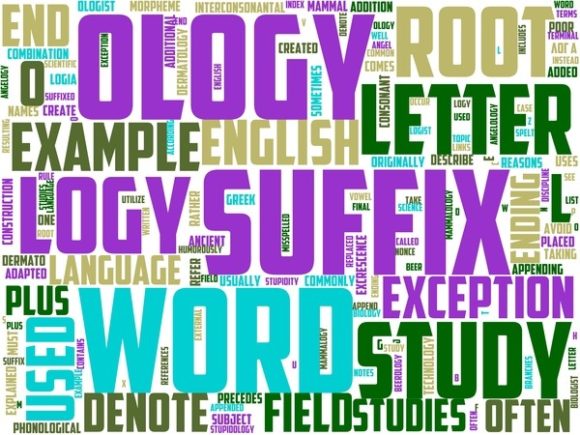
At first glance, Onychopathology Wordart Sticker.jpg appears as a vibrant, hand-drawn wordcloud—colorful, organic, and rich with layered typography. But look closer: this isn’t just decorative filler. It’s a precision-crafted visual asset designed to resonate across disciplines—from clinical education and wellness branding to expressive textile design and mindful consumer products. Its name may nod to onychopathology (the medical study of nail disorders), yet its utility extends far beyond dermatology. This file represents a growing shift in how professionals source, deploy, and value intentional, context-aware design elements.
What Is Onychopathology Wordart Sticker.jpg—Really?
Onychopathology Wordart Sticker.jpg is a high-resolution, hand-illustrated digital sticker featuring a thoughtfully curated wordcloud. Unlike algorithmically generated word clouds, it’s drawn by hand—each term placed with spatial intention, color assigned for visual hierarchy and emotional resonance, and line weight varied to guide the eye. The subject matter centers on themes of care, precision, growth, resilience, and holistic health—words like nail health, diagnosis, keratin, hygiene, dermatology, renewal, and balance interweave with broader, inspirational terms such as clarity, integrity, and attention.
Its JPEG format ensures broad compatibility—no need for specialized software or licensing negotiations. It’s ready for immediate use in print and digital workflows: resized for a business card, layered into a poster layout, screen-printed onto organic cotton tote bags, or embedded into an e-book chapter opener. Crucially, it’s not a clipart relic—it’s a design-ready artifact, conceived with real-world production constraints and aesthetic cohesion in mind.
Beyond Decoration: Why This Wordart Fits Today’s Creative and Commercial Landscape
The rise of assets like Onychopathology Wordart Sticker.jpg reflects deeper currents reshaping creative practice. First, there’s the human-first design movement: consumers and clients alike are rejecting sterile, AI-saturated visuals in favor of warmth, tactility, and authenticity. Hand-drawn elements signal care, craft, and intention—qualities that build trust in saturated markets, especially in health, wellness, education, and sustainable lifestyle sectors.
Second, it aligns with the modular creativity economy. Professionals no longer build entire campaigns from scratch. Instead, they assemble high-fidelity, rights-cleared components—logos, icons, patterns, typographic elements—into cohesive systems. Onychopathology Wordart Sticker.jpg functions precisely as one of those interoperable units: it works equally well as a focal point on a conference banner, a subtle watermark on a therapy worksheet, or a repeating motif in textile design for a boutique nail studio’s aprons and packaging.
Third, it responds to cross-disciplinary convergence. Dermatologists launching patient education apps, indie jewelry designers crafting “science-meets-soul” collections, or occupational therapists developing sensory-friendly classroom tools—all are drawing from overlapping visual vocabularies. A wordcloud rooted in onychopathology doesn’t isolate; it invites translation. “Keratin” becomes a metaphor for structural strength in a leadership workshop. “Renewal” anchors a mindfulness journal cover. That flexibility is strategic—not accidental.
Practical Integration Across Roles and Workflows
For healthcare educators and clinicians, Onychopathology Wordart Sticker.jpg offers a non-clinical entry point into complex topics. Rather than opening a lecture with dense histology slides, a presenter might project the wordcloud behind an introduction—inviting curiosity before diving into pathophysiology. Printed at scale, it becomes a wall-mounted teaching aid in a student clinic, reinforcing terminology through visual repetition without didacticism.
Entrepreneurs and product creators leverage it differently. Consider a small-batch skincare brand launching a “Nail & Nail Bed Wellness” line. The sticker appears on product tags (printed on recycled kraft paper), embroidered subtly onto reusable cotton pouches, and animated gently in Instagram Stories to highlight ingredient benefits (“biotin”, “zinc”, “omega-3”). Here, the wordcloud isn’t explaining science—it’s embodying it, making technical language feel accessible and aspirational.
Freelance designers and marketers integrate it as a unifying device across touchpoints. A wellness retreat’s branding system might use the same color palette and hand-drawn texture found in Onychopathology Wordart Sticker.jpg to unify email headers, printed programs, and custom enamel pins. Its presence signals continuity—not repetition. And because it’s delivered as a JPEG, it slots seamlessly into Canva templates, Adobe Express projects, or Figma design systems without font-matching headaches or vector conversion delays.
Real-World Observations: What Users Are Doing Right Now
- A university dermatology department uses it as a background element in their annual “Skin Health Awareness Week” digital toolkit—customized with institutional colors and paired with QR codes linking to free self-assessment guides.
- An Etsy-based mixed-media artist layers it beneath translucent vellum in handmade journals, then hand-embroiders select words (“patience”, “growth”) in silk thread—transforming clinical vocabulary into tactile affirmations.
- A B2B SaaS platform for medical spas licenses it for internal team swag: printed on ceramic mugs and notebook covers to reinforce core values—“precision”, “care”, “evidence”—during staff onboarding.
- A pediatric occupational therapist prints it at 4×6 inches, laminates it, and uses it as a visual schedule anchor for children learning self-care routines—turning nail hygiene into a collaborative, language-rich activity.
Aligning With Evolving Expectations: Clarity, Context, and Craft
Today’s professionals demand more than aesthetics—they seek semantic coherence. A design element must carry meaning that aligns with audience values and organizational mission. Generic floral borders or abstract gradients no longer suffice when stakeholders expect visual language to reflect expertise, ethics, and empathy. Onychopathology Wordart Sticker.jpg meets that expectation by grounding beauty in specificity: its vocabulary is accurate, its execution is artisanal, and its adaptability is engineered—not assumed.
It also answers rising expectations around inclusive production. Because it’s resolution-independent in practical application (works crisply from 2-inch stickers to 48-inch banners) and requires no proprietary software, it lowers barriers for creators working across budgets, tech access levels, and geographic regions. A freelance designer in Lisbon can license it and deliver polished assets to a clinic in Nairobi using only free-tier tools—no subscription fatigue, no compatibility friction.
Finally, it supports sustainable creative habits. Rather than commissioning custom illustrations for every micro-use case—a time- and cost-intensive process—teams adopt versatile, ethically sourced assets like this one. It reduces redundant labor, minimizes revision cycles, and encourages thoughtful reuse over disposable novelty.
Looking Ahead: Not Just a Sticker—A Signal of Intentional Practice
Assets like Onychopathology Wordart Sticker.jpg won’t replace custom illustration—but they’re redefining where and how custom thinking begins. They serve as intelligent starting points: springboards for adaptation, not endpoints for consumption. As AI accelerates template generation, the value of human-crafted, contextually grounded elements rises—not because they’re rare, but because they’re resonant.
For professionals navigating hybrid roles—clinician + content creator, entrepreneur + educator, marketer + maker—this kind of asset bridges domains without diluting expertise. It acknowledges that communication happens across surfaces: skin, fabric, screen, paper, ceramic. And it affirms that even the most technical subjects deserve visual expression that is both precise and poetic.
If you’re selecting design resources for your next project, ask not just “Does this look good?” but “Does this deepen understanding? Does it honor the subject? Does it travel well across formats and audiences?” Onychopathology Wordart Sticker.jpg was built to answer yes—to all three.