Nguni Stick Fighting Wordart Tshirt.jpg: A Cultural Motif Reimagined for Creative Expression
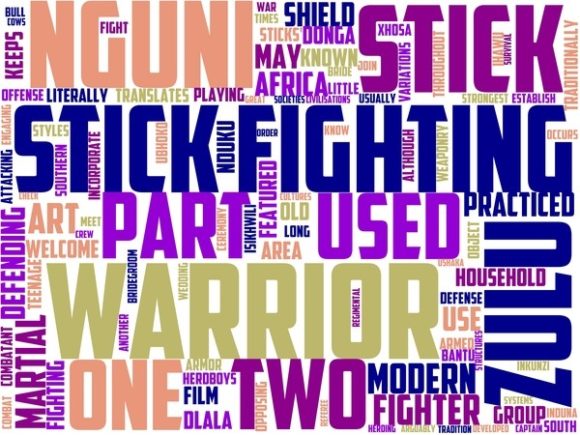
At first glance, Nguni Stick Fighting Wordart Tshirt.jpg appears as a vibrant digital asset—bold typography interwoven with symbolic motifs, rich in color and cultural resonance. But this image is more than decorative shorthand. It represents a dynamic convergence of heritage, linguistic identity, and contemporary design practice. Rooted in the oral traditions and embodied knowledge of Southern African Nguni communities—particularly among Zulu, Xhosa, Swazi, and Ndebele peoples—stick fighting (ukungena, umshiza, or induku combat) is not merely sport. It is ritual, pedagogy, social cohesion, and historical memory made kinetic. The wordart interpretation transforms that lived tradition into a scalable, adaptable visual language—one now embedded in Nguni Stick Fighting Wordart Tshirt.jpg and widely deployable across physical and digital media.
How Wordcloud Design Bridges Culture and Craft
The specific file referenced—Nguni Stick Fighting Wordart Tshirt.jpg—is built from a hand-drawn, colorful wordcloud. Unlike algorithmically generated tag clouds, this version is intentionally composed: each term placed with compositional balance, weighted by cultural significance rather than frequency alone. Words like “courage”, “ancestry”, “rhythm”, “discipline”, “pride”, “resilience”, “lineage”, “dance”, “shield”, “call”, “elders”, and “initiation” appear alongside isiZulu and isiXhosa terms such as izibhamu (sticks), umgidi (formation), ukubonga (to praise), and isithunywa (the call to engage). These are not random; they reflect documented vocabulary used in oral instruction, praise poetry (izibongo), and ceremonial narration.
This deliberate curation gives the wordcloud its dual functionality: it serves both as an aesthetic anchor and as a quiet pedagogical tool. When applied to textiles or stationery, it invites closer reading—not just of form, but of meaning. A teacher might project the image during a unit on indigenous knowledge systems; a textile designer may isolate syllables like “-thunywa” or “-bonga” to inform pattern repeats; a community organizer could adapt phrases for youth workshop banners, grounding modern advocacy in ancestral lexicon.
Practical Applications Across Diverse Contexts
The versatility of Nguni Stick Fighting Wordart Tshirt.jpg stems from its resolution, stylistic warmth, and semantic density. Because it was designed for real-world application—not just screen display—it scales cleanly across substrates and formats. Below are grounded use cases, organized by sector and implementation logic:
- Educational Materials: Printed at high resolution on poster board, the wordcloud becomes a classroom anchor chart for units on Southern African history, linguistics, or physical culture. Teachers report increased student engagement when vocabulary is embedded visually *and* contextually—e.g., pairing “rhythm” with audio clips of isishameni drum patterns or “lineage” with genealogical mapping exercises.
- Textile & Apparel Design: As implied by its filename, Nguni Stick Fighting Wordart Tshirt.jpg functions exceptionally well on cotton, linen, and blended fabrics. Its layered color blocks and varied font weights prevent ink bleed during screen printing. Designers note that reversing select words into negative space (e.g., white text on indigo fabric) enhances tactile readability and honors traditional indigo-dye aesthetics.
- Community-Led Branding: Local arts collectives in KwaZulu-Natal and the Eastern Cape have repurposed elements of the wordcloud into logos for after-school stick-fighting clubs. Rather than appropriating motion or weaponry literally—which risks flattening sacred practice—they extract typographic rhythm and phrase cadence. One group uses the stacked phrase “Ukuziphatha ngobuhle, ukuziphatha ngomthwalo” (“To carry oneself with beauty, to carry oneself with responsibility”) as a motto stitched onto training jackets.
- Publishing & Editorial Design: Editors of bilingual literary journals integrate cropped sections of the wordcloud into section dividers—using “call”, “response”, and “echo” as recurring visual motifs between isiXhosa short stories and English translations. This subtle repetition reinforces dialogic structure without overt explanation.
- Mixed-Media Art Practice: Visual artists scan and deconstruct the JPEG into vector layers, isolating individual strokes to create stencils for mural work or laser-cut wooden signage. One Johannesburg-based collective translated the wordcloud into embossed braille on handmade paper, pairing tactile texture with lexical content for inclusive exhibition design.
Design Integrity and Ethical Considerations
Adopting Nguni Stick Fighting Wordart Tshirt.jpg carries implicit responsibilities. Stick fighting is a living tradition, governed by protocols around initiation, mentorship, and spiritual preparation. Its representation in commercial or educational contexts must avoid reductionism—treating it solely as “pattern” or “aesthetic”. Practitioners emphasize that the most respectful applications foreground relationship over replication: collaborating with cultural bearers, crediting source communities, and directing proceeds toward grassroots training programs.
For example, a university department using the wordcloud in a public-facing diversity campaign partnered with the Isibindi Foundation, a Durban-based NGO supporting intergenerational knowledge transfer in rural amakhaya. They co-developed a companion guide explaining each term’s contextual usage—not as dictionary definitions, but as situated utterances within ceremony, conflict resolution, or rites of passage. That layer of intentionality transformed a visual asset into a conduit for deeper learning.
Technical Advantages for Makers and Producers
From a production standpoint, Nguni Stick Fighting Wordart Tshirt.jpg offers tangible workflow efficiencies. Its JPEG format ensures broad compatibility—no need for specialized software to open or edit. Yet its hand-drawn quality means it avoids the sterility of auto-generated assets. Designers appreciate that the irregular baseline alignment and organic stroke variation introduce subtle visual tension, making layouts feel human-scaled rather than algorithmically optimized.
When preparing for print, users report consistent results across substrates: the contrast between deep umbers, burnt siennas, and ochres holds up on uncoated paper stock; the saturated blues and greens remain vivid on ceramic mugs fired at standard temperatures; and the fine linework resolves cleanly even at 300 DPI on woven tote bags. For digital use, the file compresses efficiently without visible artifacting—making it suitable for email newsletters, social media carousels, or interactive PDFs where load time matters.
Scalability Beyond Apparel
While the filename references t-shirts, the asset’s utility extends far beyond wearable media. Its modular composition allows for intelligent cropping:
- A single phrase—like “Umuntu ngumuntu ngabantu” (a person is a person through other people)—can be isolated for business cards or conference name tags.
- Repeating clusters of rhythmic syllables (“ba-ba-ba”, “thu-thu-thu”) serve as borders on invitation suites or program covers.
- Color-blocked sections function as background textures beneath transparent typography in e-book chapter headers.
- Individual glyphs—such as stylized induku shapes embedded in letterforms—become standalone icons for app interfaces or wayfinding signage in cultural centers.
Why This Resonates Across Professional Roles
What makes Nguni Stick Fighting Wordart Tshirt.jpg relevant to such a wide audience—from researchers analyzing oral performance to small-batch ceramicists—is its refusal to sit in one category. It is simultaneously:
- A linguistic artifact, preserving orthographic choices that reflect contemporary orthography debates (e.g., use of diacritics, spacing conventions in compound terms);
- A visual ethnography, encoding spatial relationships that mirror communal formations seen in stick-fighting circles;
- A production-ready resource, engineered for speed, fidelity, and flexibility;
- An invitational object, prompting viewers to ask: What does “discipline” mean here? Whose voice is centered in “praise”? How does rhythm translate across media?
That multiplicity is rare. Most culturally derived design assets lean heavily into either authenticity *or* usability. Nguni Stick Fighting Wordart Tshirt.jpg sustains both—without compromise.
Integrating Meaningful Repetition Into Daily Practice
Finally, the wordcloud’s greatest strength may lie in how easily it supports iterative, low-stakes creative acts. A researcher annotating field notes might trace a phrase like “elders” onto the margin of a transcript. A hobbyist embroiderer could translate “call” into cross-stitch using only three thread colors matching the JPEG’s palette. A high school art student might collage fragments of the image into a zine exploring identity and belonging. These micro-engagements accumulate—not as consumption, but as participation.
In this light, Nguni Stick Fighting Wordart Tshirt.jpg is less a static file and more a node in a network of making, remembering, and reimagining. Its value isn’t locked in pixels, but activated each time someone chooses to pause, recognize a term, research its roots, and carry it forward—with care, curiosity, and craft.